

Miami’s food scene is often celebrated for its Cuban and Latin American influence — but there’s another culinary story running just as deep beneath the surface, one written in Overtown kitchens, Bahamian conch stands, and Little Haiti storefronts. Black Miami’s food history is a story of migration, resilience, and community — and it’s told through dishes that have survived segregation, gentrification, and generations of change.
Here are five dishes that carry that story.
1. Conch Fritters
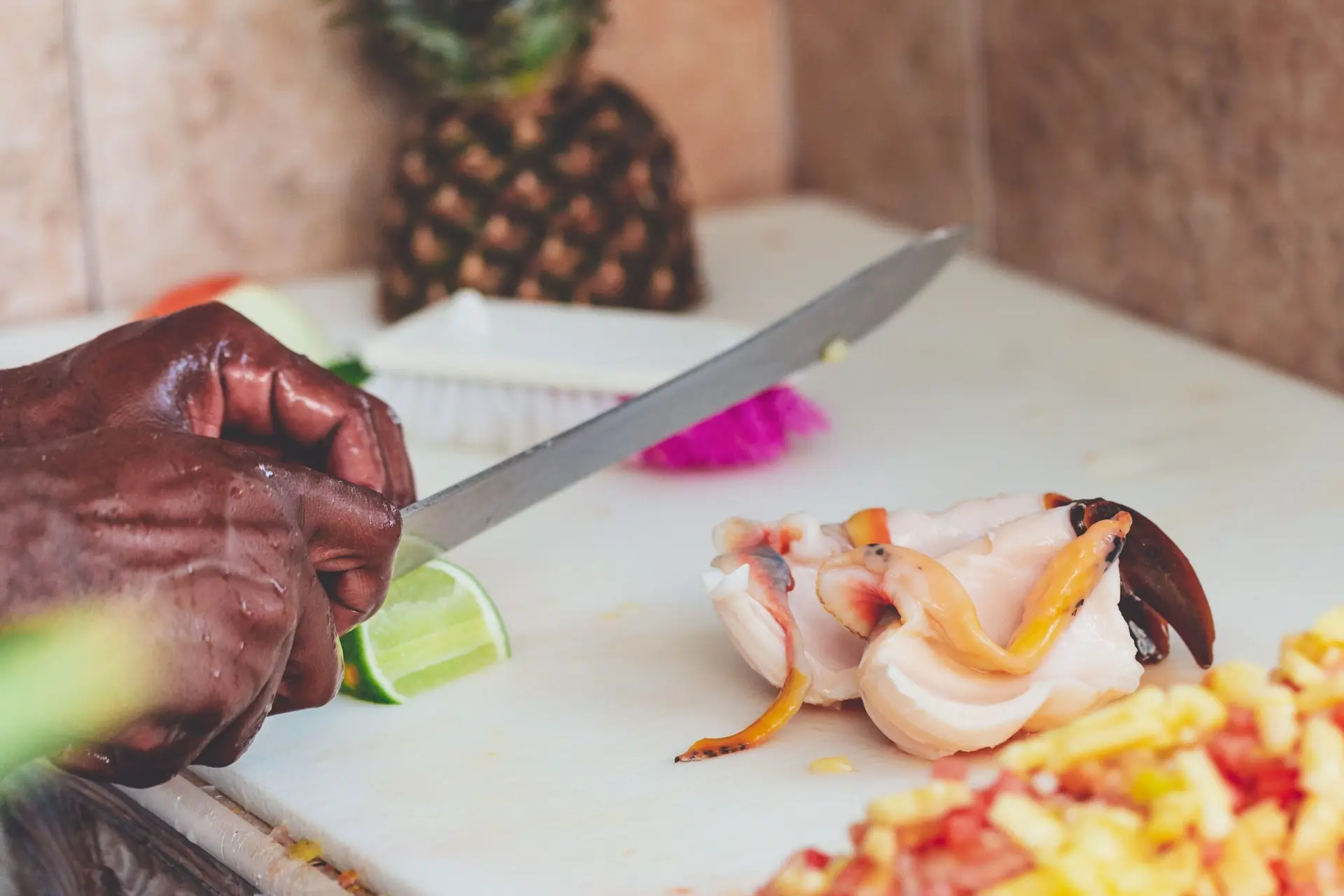
Long before conch fritters became a staple on South Florida menus everywhere, they were a Bahamian tradition brought to life on the streets of Overtown — once known as “Colored Town” during segregation. Enterprising Bahamian immigrants set up street conch stations along Northwest Second Avenue, and the food built such a devoted following that people would reportedly argue over the last fritter when the batter ran low.
Conch fritters weren’t just delicious — they were economic lifelines. Community members in neighboring Liberty City sold conch fritters as fundraisers to support local causes, including a neighborhood nursery school, when the segregated school board failed to provide adequate resources.
The story it tells: Conch fritters represent the deep Bahamian roots woven into Black Miami’s identity, and the way food became both a cultural anchor and a form of community self-reliance.
2. Bahamian Souse
Alongside conch fritters and conch salad, Bahamian souse became a signature dish of Overtown’s early street food scene — chicken or pork slow-cooked in a lime-and-vinegar broth with potatoes, served warm like a soup. It’s worth noting this is a distinctly different preparation from the gelatinous “souse loaf” more familiar in some Southern culinary traditions, though the two dishes share a name and a lineage rooted in resourceful, flavorful cooking.
The story it tells: Souse reflects the layered Caribbean and Southern influences that have always coexisted in Black Miami’s food culture, often within the very same block.
3. Soul Food Classics — Fried Chicken, Oxtail Stew, and Collard Greens
Step into Jackson Soul Food, an Overtown institution that has served the community since 1946, and you’ll find the backbone of Black Miami’s culinary tradition: fried catfish, smothered oxtail stew, collard greens, and warm cornbread — the kind of home-style Southern cooking passed down through generations. Founded by Jessie and Demas Jackson and still family-run today, it’s one of the longest-standing symbols of soul food’s place in Miami’s Black community.
The story it tells: These dishes carry the Great Migration story — Southern culinary traditions brought south to Miami and kept alive as an act of cultural preservation, not just comfort.
4. Haitian Griot with Pikliz
Head into Little Haiti and griot — crispy, marinated fried pork, traditionally served alongside pikliz (a spicy pickled cabbage and vegetable relish) — tells a different but equally vital chapter of Black Miami’s food story. Little Haiti’s restaurants blend African, French, and indigenous Taíno culinary influences, a direct reflection of Haiti’s own layered history, now transplanted and thriving in South Florida.
The story it tells: Griot and pikliz represent the Haitian diaspora’s imprint on Miami — proof that Black Miami’s culinary identity isn’t singular, but a mosaic of African diasporic traditions from across the Caribbean.
5. Chicken and Waffles, Reimagined
At Overtown’s Red Rooster — helmed by chef Marcus Samuelsson — soul food classics get reimagined through a Caribbean lens, blending Southern comfort food techniques with island flavors and ingredients. The result is a menu, and a restaurant, that consciously honors Overtown’s layered history while pushing its culinary story forward into something new.
The story it tells: This modern fusion reflects where Black Miami’s food culture is headed — not abandoning its roots, but building on them, blending Southern soul with Caribbean flavor in ways that feel both familiar and new.