
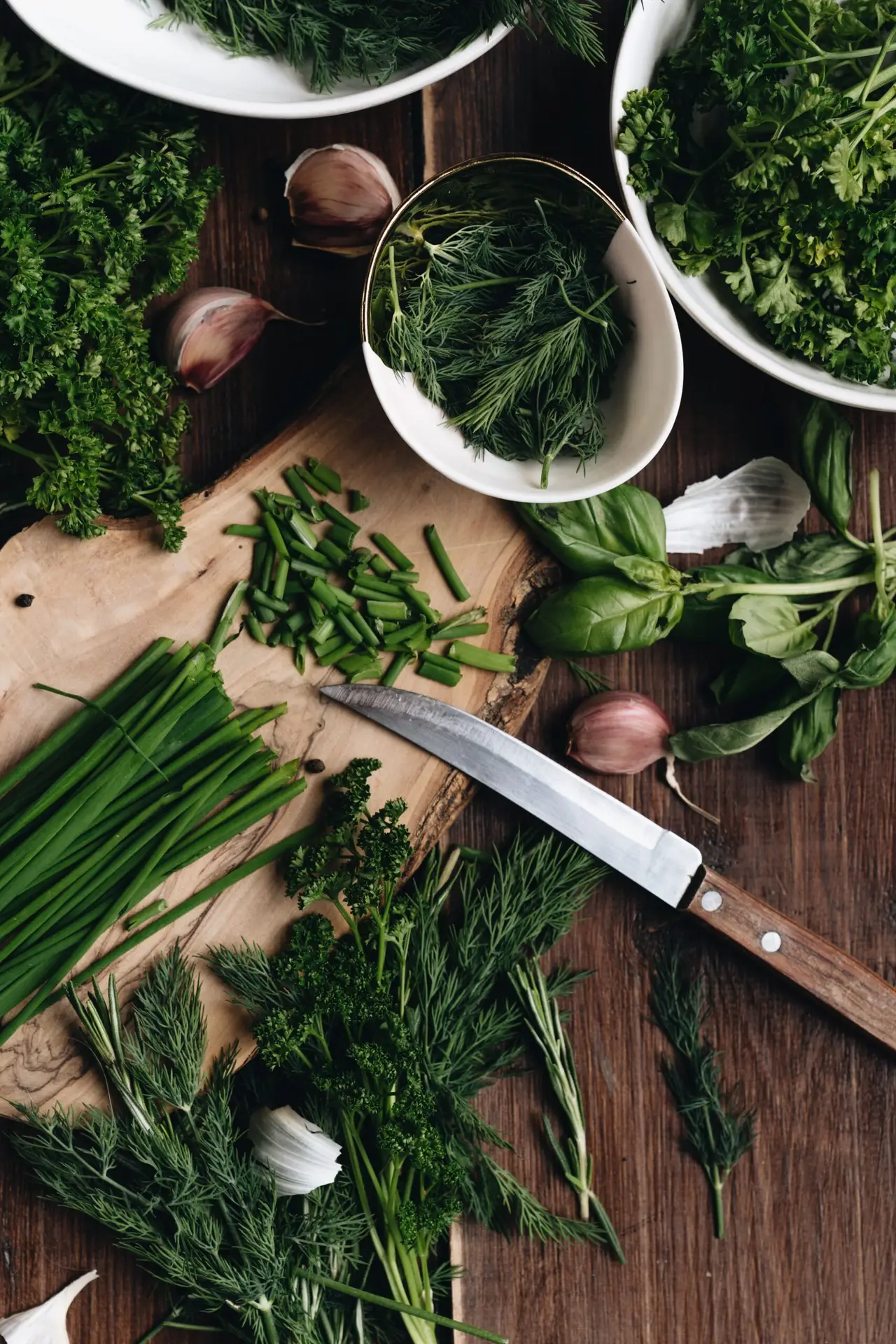

Herbs are so underrated in the kitchen. Out of all of the things I’m growing in my garden, herbs are a frequent staple. Some ingredients quietly do the heavy lifting in a dish without taking center stage — and herbs do just that. A pinch of the right one can turn a simple recipe into something that tastes intentional, layered, and alive. Whether you’re growing your own or stocking your spice rack, these five herbs show up in my kitchen (and recipes) more than almost anything else — for good reason.
1. Basil
Basil is the backbone of Italian cooking — think pesto, caprese salad, and a fresh tomato sauce finished with torn leaves right before serving. Its flavor is bright, slightly peppery, and a little sweet, and it pairs beautifully with tomatoes, garlic, and olive oil.
Best used: Fresh, added at the end of cooking — heat can quickly dull its bright flavor.
Try it in: Pesto, Caprese salad, homemade marinara, or torn over a finished pizza.
2. Parsley
Often mistaken for a garnish, parsley is actually one of the most versatile herbs in the kitchen. Its clean, slightly peppery flavor brightens up heavier dishes and balances rich flavors without overpowering them. I like to blend fresh parsley and lime with water and drink it as a green juice.
Best used: Fresh, either chopped into dishes or used as a finishing herb.
Try it in: Chimichurri, roasted vegetables, or stirred into soups and stews right before serving.
3. Cilantro
Cilantro is a defining flavor in Mexican, Southeast Asian, and Indian cuisines — bright, citrusy, and a little bit pungent (some people say they taste soap instead of herb, lol). Love it or hate it, it’s one of the most widely used herbs across global cuisine.
Best used: Fresh, added at the end of cooking or as a garnish, since heat diminishes its flavor quickly.
Try it in: Salsa, guacamole, curries, tacos, or a finishing garnish over rice bowls.
4. Rosemary
With its bold, pine-like aroma, rosemary holds up beautifully to high heat and long cooking times — which makes it a favorite for roasting and grilling. A little goes a long way, so it’s typically used more sparingly than herbs like basil or parsley. One of my favorites.
Best used: Fresh or dried, added early in cooking so its flavor has time to infuse.
Try it in: Roasted potatoes, grilled meats, in a martini, or infused into olive oil.
5. Thyme
Thyme’s subtle, earthy flavor makes it one of the most versatile herbs in the kitchen — it works quietly in the background of soups, stews, roasted vegetables, and sauces without ever overwhelming a dish. It’s also a key staple in Caribbean and island cuisine. Ask any island person what their favorite or most used herb is and they will probably tell you, thyme. There are many varieties, but I tend to pull more for German thyme due to its bolder and more pungent flavor.
Best used: Fresh or dried, added early in cooking to let its flavor slowly infuse the dish.
Try it in: Soups, braises, cocktails, roasted chicken, or a simple pan sauce.
A Few Tips for Cooking with Fresh Herbs
- Delicate herbs (basil, parsley, cilantro) are best added at the end of cooking to preserve their bright flavor.
- Hardier herbs (rosemary, thyme) can handle longer cooking times and are often added earlier to let their flavor fully develop.
- Store fresh herbs like a bouquet — stems in a glass of water, loosely covered, in the fridge — to extend their life by days, sometimes over a week.