
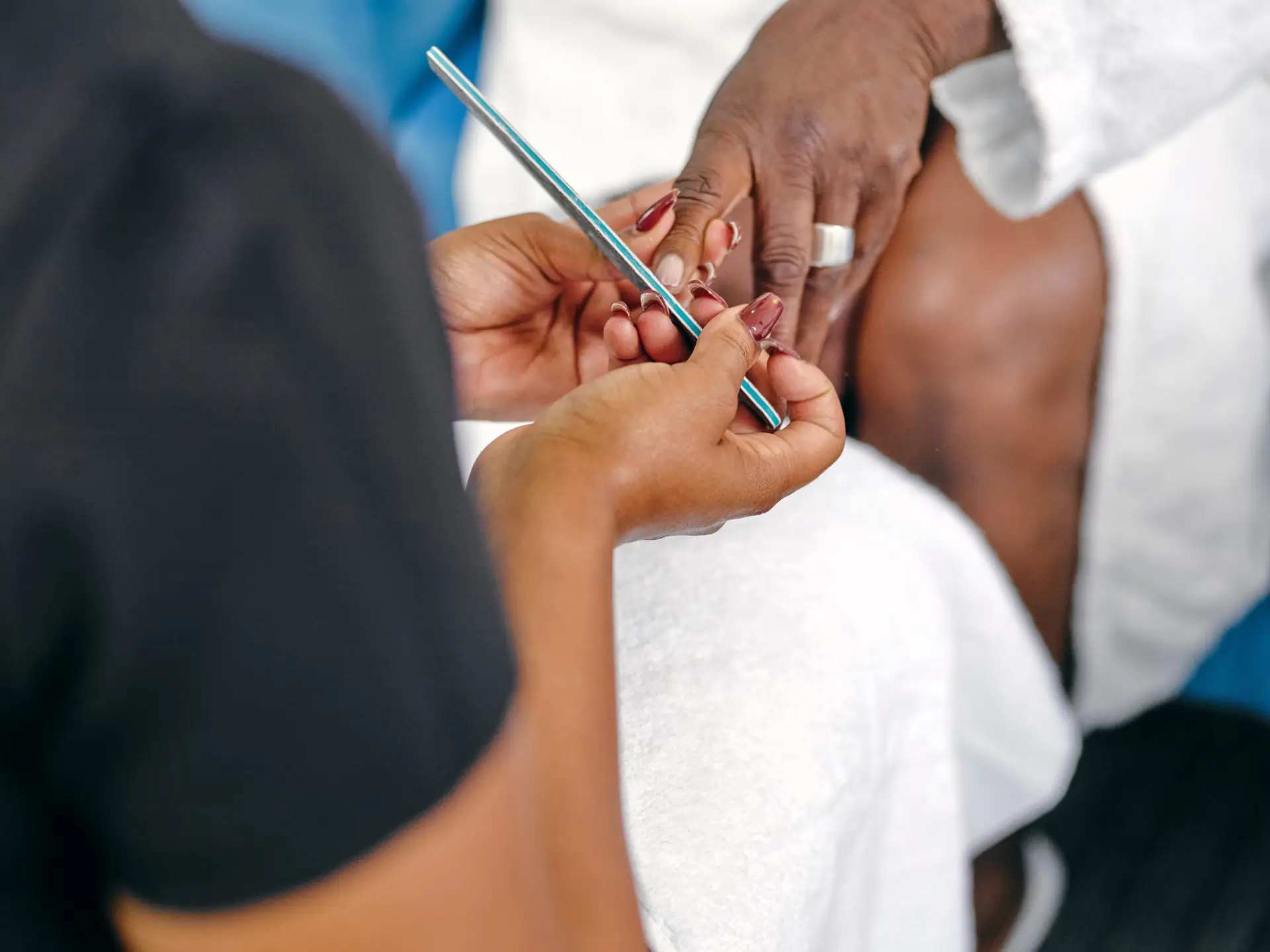

There’s no denying the appeal of acrylics — long, flawless, camera-ready nails on demand. But if you’ve been getting fill-ins for years without much of a break, it might be time to reconsider. Dermatologists and nail health experts have been sounding the alarm on what continuous acrylic use actually does to your natural nails, skin, and health over time.
Here are five reasons it might be worth stepping away from acrylics — even if just for a season.
1. They Weaken and Thin Your Natural Nails
Every acrylic application involves buffing and filing your natural nail plate to help the acrylic adhere — and over time, this repeated process thins the nail. Dermatologists note that removing acrylics can damage or even strip the top layer of the nail, sometimes leaving nails weak and brittle for up to six months before healthy nail growth fully replaces the damage.
The takeaway: The “strong nails” acrylics seem to give you are often masking natural nails that are getting progressively thinner and weaker underneath.
2. Removal Can Cause Real, Lasting Damage
It’s not just the wear — it’s the removal. Peeling or improperly removing acrylics can shave away fragments of the nail plate itself, damaging its keratin layers and leaving nails brittle or discolored. This process can also lead to onycholysis, a condition where the nail plate actually separates from the nail bed — something that can take months to fully grow out and correct.
The takeaway: If you do wear acrylics, always have them professionally removed rather than picking or peeling them off yourself — it makes a real difference in how much damage is done.
3. The Chemicals Involved Can Trigger Allergies and Irritation
Acrylic systems rely on strong primers, adhesives, and monomers — and prolonged, repeated exposure to these chemicals can lead to skin irritation, allergic reactions, or contact dermatitis. Some people develop sensitivities over time to specific ingredients like methacrylates, and once that sensitization develops, it doesn’t always go away — it can even affect future reactions to unrelated products like dental materials or medical adhesives.
The takeaway: The risk isn’t just cosmetic — repeated chemical exposure can create lasting sensitivities that follow you well beyond your next manicure.
4. They Create a Breeding Ground for Infection
When acrylics lift, crack, or grow out, small gaps form between the artificial nail and your natural nail — and those gaps are a perfect environment for bacteria and fungi to thrive. This can lead to visible discoloration, infection, or thickened, damaged nails, especially if fill-ins are stretched out too long between appointments.
The takeaway: The longer you go without a break, the more opportunity there is for moisture and bacteria to get trapped beneath the surface.
5. Your Nails Need Time to Actually Recover
Acrylics seal the surface of the nail, which limits its natural moisture and flexibility — and over time, that sealed-off environment leads to brittleness and cracking once the acrylic is removed. Experts recommend giving nails intentional breaks between sets, allowing them to rehydrate and rebuild strength with nourishing oils and treatments, rather than moving straight into the next fill.
The takeaway: Even if you love the look of acrylics, your nails need real recovery time to stay healthy long-term — not just a quick coat of cuticle oil between appointments.
Beautiful nails shouldn’t come at the cost of your nail health. If you love the acrylic look, consider building in real breaks between sets, choosing a reputable salon that prioritizes proper application and removal, and giving your natural nails the same care and attention you give the rest of your beauty routine.
Because true style was never about sacrificing your health for the look — it’s about finding a way to have both.